The Challenge
Why does industrial process water from rivers and borewells need treatment before use?
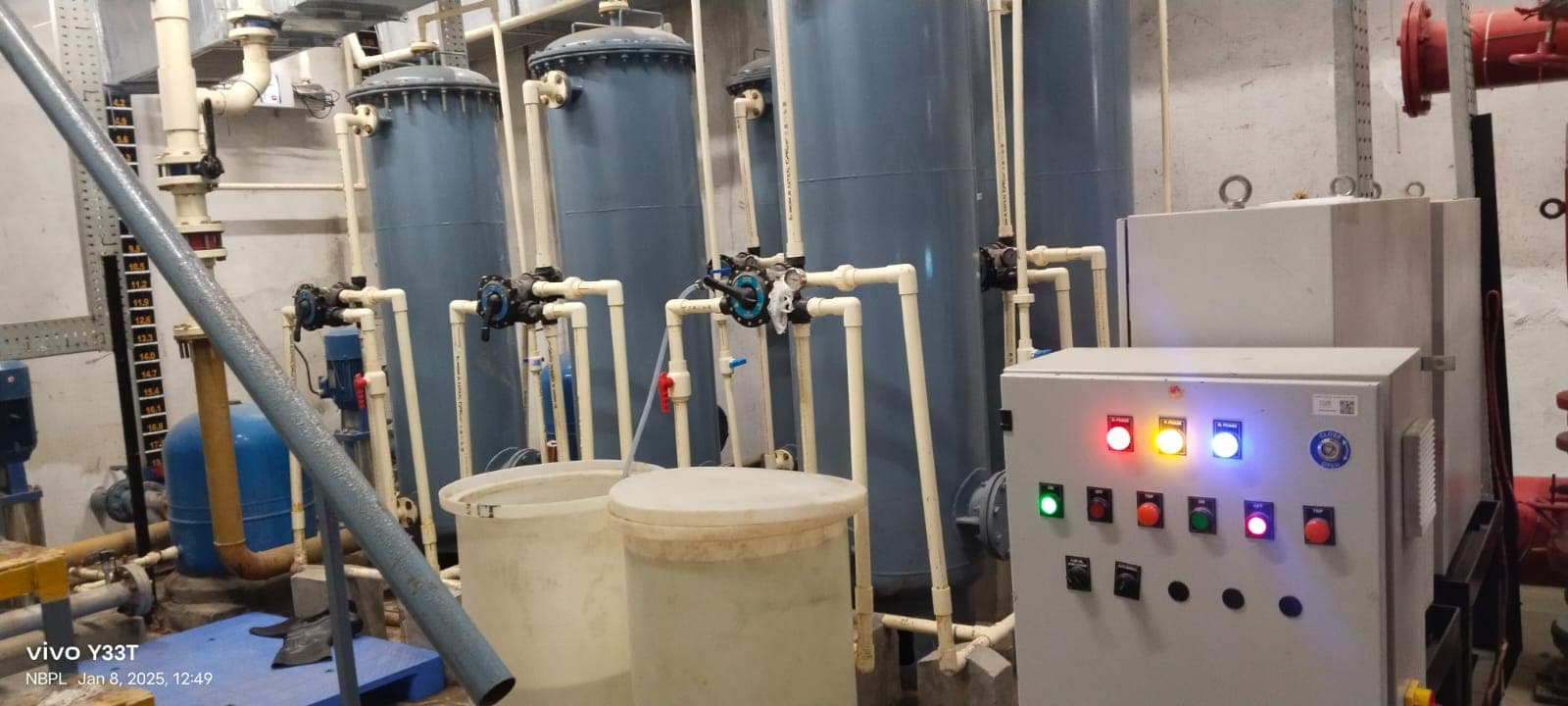
Indian groundwater often carries fluoride, arsenic, iron, and hardness at levels that damage boilers, corrode pipes, and contaminate products. Surface water carries turbidity, bacteria, and seasonal variation that no process can tolerate. Navbharat Water's Water Treatment Plants (WTPs) convert whatever source you have into the exact water quality your process, boiler, or cooling system requires.
mg/L TDS — the highest groundwater TDS Navbharat Water has successfully treated for industrial reuse
How It Works
Clarification, softening, and polishing — in the right sequence.
WTP design begins with a detailed source water analysis. Every stage is sized for your specific impurity profile — not a generic catalogue design.
Clarification
Coagulation, flocculation, and sedimentation remove turbidity, colour, and suspended solids from raw surface water or high-turbidity borewell water. Tube settlers or lamella clarifiers compact the process footprint by 50% versus conventional designs.
Softening & DM
Ion exchange softeners remove calcium and magnesium (hardness), protecting downstream boilers and heat exchangers from scale. Demineralisation (DM) plants or RO systems remove TDS to the level required by your process or boiler operating pressure.
Polishing & Disinfection
Multimedia filtration, activated carbon, and UV/chlorination ensure the water is clear, low-TOC, and microbiologically safe. For pharmaceutical and food applications, a final RO or EDI stage delivers USP-grade purity.
Technical Specifications
Built for precision.
| Parameter | Value / Range |
|---|---|
| Capacity range | 10 KLD – 10 MLD |
| Inlet turbidity (surface water) | up to 500NTU |
| Outlet turbidity | < 1NTU |
| Hardness removal | > 95% |
| Iron removal | > 95% |
| Fluoride removal (if applicable) | To BIS IS 10500 < 1mg/L |
| DM plant outlet TDS | < 10mg/L |
| Boiler feed WTP classes | LP (≤17 bar), MP (17–40 bar), HP (>40 bar) |
WTP design begins with source water analysis. Inlet turbidity up to 500 NTU (monsoon surface water) is handled by tube-settler clarifiers, reducing to below 1 NTU before filtration. DM plant outlet TDS below 10 mg/L satisfies boiler feed requirements up to high-pressure (>40 bar) systems. Iron removal above 95% addresses the most common borewell contamination across Maharashtra, Gujarat, and Karnataka.
Case Study
Proven in the field.
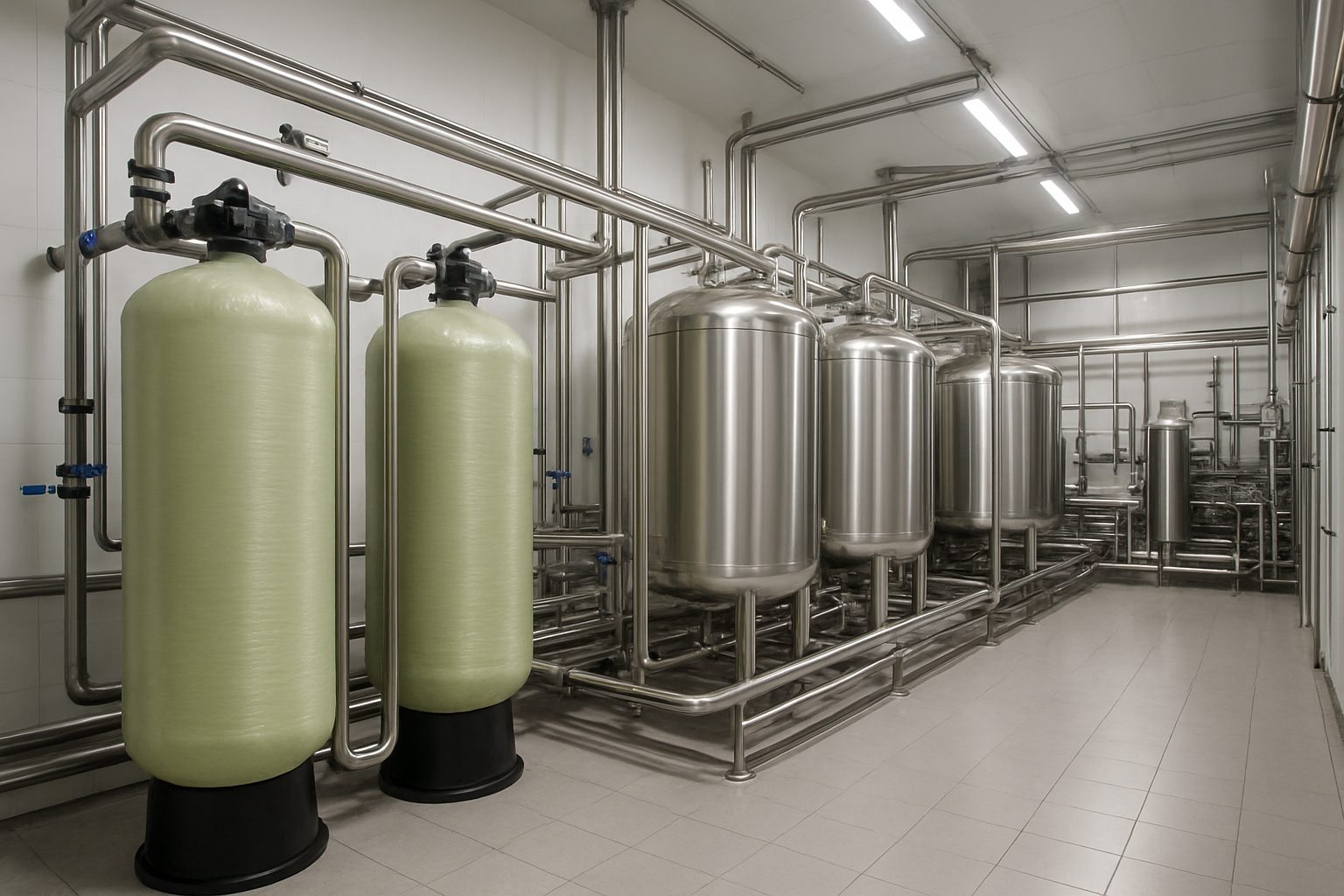
Food Processing WTP — 500 KLD, Pune, Maharashtra
Raw river water (turbidity 120 NTU, TDS 380 mg/L) converted to FSSAI-compliant process water at 0.3 NTU, <50 mg/L TDS. Boiler feed polished to conductivity <5 µS/cm. Zero product contamination incidents in 2 years of operation. FSSAI audit cleared with commendation.
View all projectsCompliance Context
Which BIS IS 10500, FSSAI, and IBR boiler regulations apply to your water treatment plant?
Water quality compliance is a moving target: FSSAI, BIS IS 10500, and boiler feed standards each specify different parameters. Navbharat Water's WTPs are designed against the most stringent standard applicable to your end use, and all equipment — from the clarifier to the DM plant — is sized for the worst-case seasonal variation in your source water quality.
BIS IS 10500:2012 — Drinking water specification
FSSAI Food Safety and Standards Regulations, 2011
IBR (Indian Boiler Regulations) — Boiler feed water quality
ASHRAE 188 — Legionella risk management for cooling systems
WHO Guidelines for Drinking Water Quality (4th ed.)
What could you save?
Calculate your NPV, IRR & payback period
Frequently Asked
Common questions answered.
Related Industries
Designed for your sector.
Request a Technical Audit for Water Treatment.
Tell us your capacity, inlet profile, and compliance targets. We'll size a system that fits.