The Challenge
Why does India mandate Zero Liquid Discharge — and what happens if you don't comply?
CPCB and state PCBs now mandate ZLD for textile clusters, pharmaceutical manufacturers, and industrial estates across 17 states. Companies that invest in ZLD early gain a permanent compliance advantage and dramatically reduce freshwater dependence — turning regulatory pressure into operational profitability.
Average savings in freshwater costs per year for a 1 MLD ZLD plant
How It Works
From raw effluent to dry salt — a closed loop.
ZLD is not a single technology; it is a carefully sequenced treatment train that progressively concentrates and eliminates liquid waste at every stage.
ETP Pre-treatment
Biological and chemical treatment removes BOD, COD, and suspended solids to bring the effluent to RO-feed quality. This stage is sized for your specific inlet profile.
Reverse Osmosis Concentration
High-pressure RO membranes separate treated water (permeate) from brine concentrate. The recovered permeate — typically 70–80% of feed — returns to your process directly.
Evaporation & Crystallisation
The remaining brine is thermally concentrated in a Multiple Effect Evaporator (MEE) or Agitated Thin Film Dryer (ATFD) until only dry, recoverable salt remains. No liquid discharge.
Interactive Diagram
ZLD Circular Economy — Closed-Loop Process
Click any stage to see details. Diagram represents a typical ZLD treatment train.


Technical Specifications
Built for precision.
| Parameter | Value / Range |
|---|---|
| Capacity range | 10 KLD – 10 MLD |
| Feed TDS | 2,000 – 80,000mg/L |
| Water recovery | 95 – 99% |
| Operating pressure (RO) | 15 – 80bar |
| Power consumption | 8 – 18kWh/m³ |
| Salt purity (ATFD) | ≥ 98% |
| Standards met | CPCB ZLD Notification 2016, State PCB consents |
| Footprint (500 KLD) | 800 – 1,200m² |
A standard 500 KLD ZLD plant achieves 95–99% water recovery, reducing freshwater consumption to near-zero. Power consumption of 8–18 kWh/m³ is highest for MEE-based systems (thermally intensive) and lowest for RO-only configurations. Salt purity of ≥98% from the ATFD enables sodium sulphate or sodium chloride recovery for resale to chemical traders.
Case Study
Proven in the field.
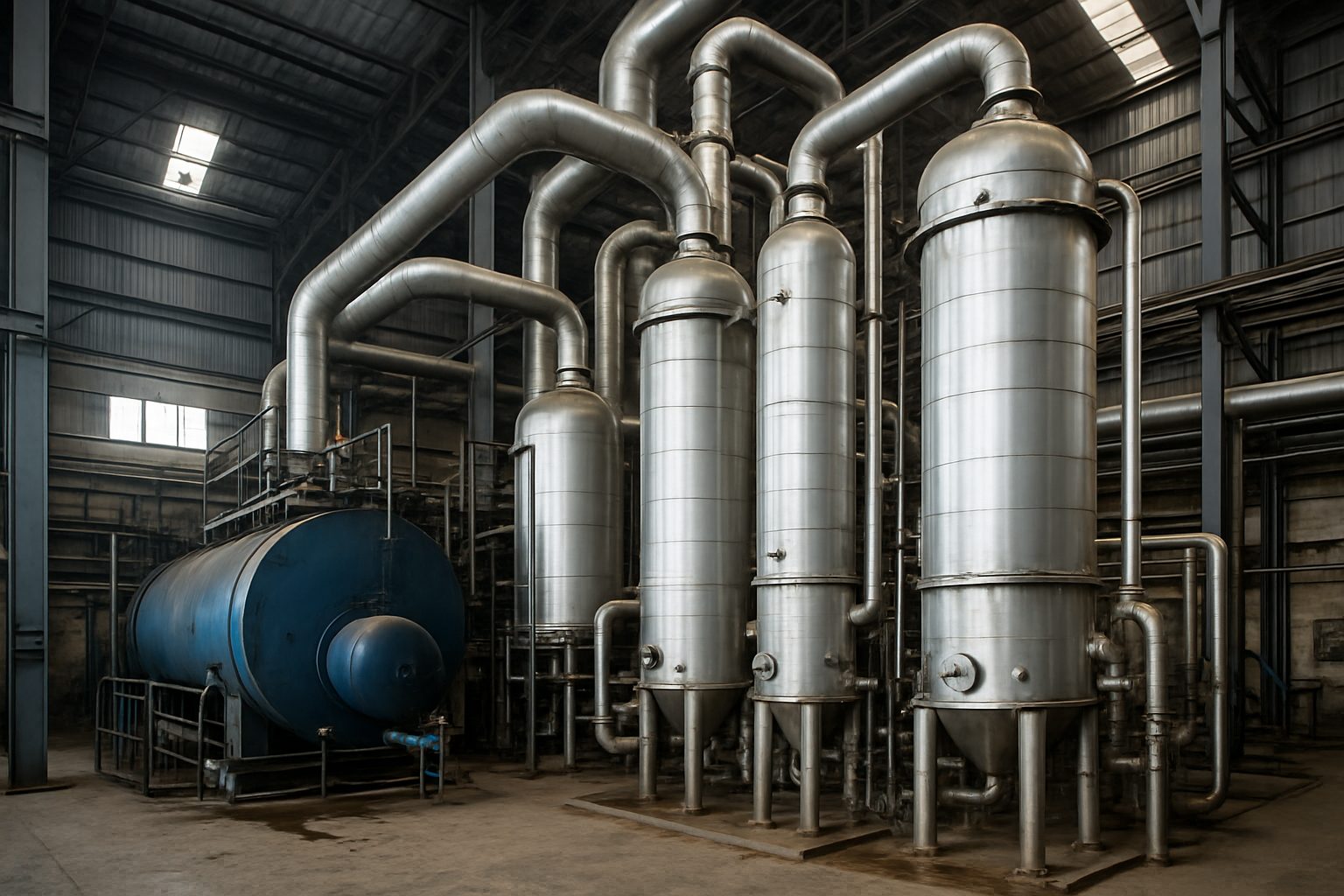
Textile Cluster ZLD — 2 MLD, Surat, Gujarat
99.2% water recovery achieved. Client reduced freshwater intake by ₹1.8 Cr/year. PCB inspection cleared without any conditions. Dry salt sold to chemical traders at ₹4/kg, partially offsetting operational costs.
View all projectsCompliance Context
Which CPCB and NGT regulations require Zero Liquid Discharge?
The CPCB ZLD Notification (2016) and subsequent state-level orders require all designated industries to implement ZLD or face closure orders, environmental compensation, and criminal liability under the Environment Protection Act, 1986. Navbharat Water's systems are designed to satisfy both central and state PCB requirements in a single installation.
CPCB ZLD Notification, October 2016
SPCB consent conditions for red-category industries
Environment Protection Act, 1986 — Schedule I & II
National Green Tribunal (NGT) compliance framework
ISO 14001 Environmental Management System alignment
What could you save?
Calculate your NPV, IRR & payback period
Frequently Asked
Common questions answered.
Related Industries
Designed for your sector.
Request a Technical Audit for Zero Liquid Discharge.
Tell us your capacity, inlet profile, and compliance targets. We'll size a system that fits.